

Views: 0 Author: Site Editor Publish Time: 2026-11-12 Origin: Site


 The plywood hot press machine is one of the most important machines in a plywood production line. It is where glued veneer layers are transformed into a stable panel through controlled heat and hydraulic pressure.
However, good plywood is not produced simply by choosing a higher-tonnage press. Stable panel quality depends on how well pressure, temperature and pressing time work together throughout every production cycle.
During hot pressing, heat helps the adhesive cure while hydraulic pressure brings the veneer layers into close contact. If these conditions are not properly controlled, problems such as weak bonding, bubbles, delamination, uneven thickness or panel deformation may occur.
This is why modern plywood factories increasingly focus on repeatable pressing conditions rather than relying only on operator experience.
Pressure has a direct influence on bonding quality and final panel thickness. Insufficient pressure may leave gaps between veneer layers, while excessive pressure can over-compress the wood or squeeze too much adhesive from the glue line.
A reliable hydraulic plywood hot press should apply stable and uniform pressure across the entire panel surface. Hydraulic system condition, cylinder performance and press platen flatness all influence the final result.
Hot press temperature cannot be considered separately from pressing time. The adhesive needs enough heat and time to cure through the complete plywood thickness.
The correct settings depend on factors such as adhesive type, veneer species, veneer moisture content and panel thickness. Modern automatic hot press machines make these parameters easier to control and repeat across different production batches.
Temperature differences across the press platens can create uneven curing and inconsistent plywood quality. For this reason, heating system design and temperature uniformity are important when selecting a plywood hot press machine.
Steam and thermal-oil heating systems are both used in industrial plywood production, and the most suitable solution depends on factory conditions, energy supply and production requirements.
The largest or fastest hot press is not always the best choice. The machine should match the panel size, required daily output, number of openings and the capacity of upstream processes such as veneer drying, glue spreading and lay-up.
If the hot press capacity is too high for the rest of the production line, the machine may spend unnecessary time waiting for material. If it is too small, it can become the main production bottleneck.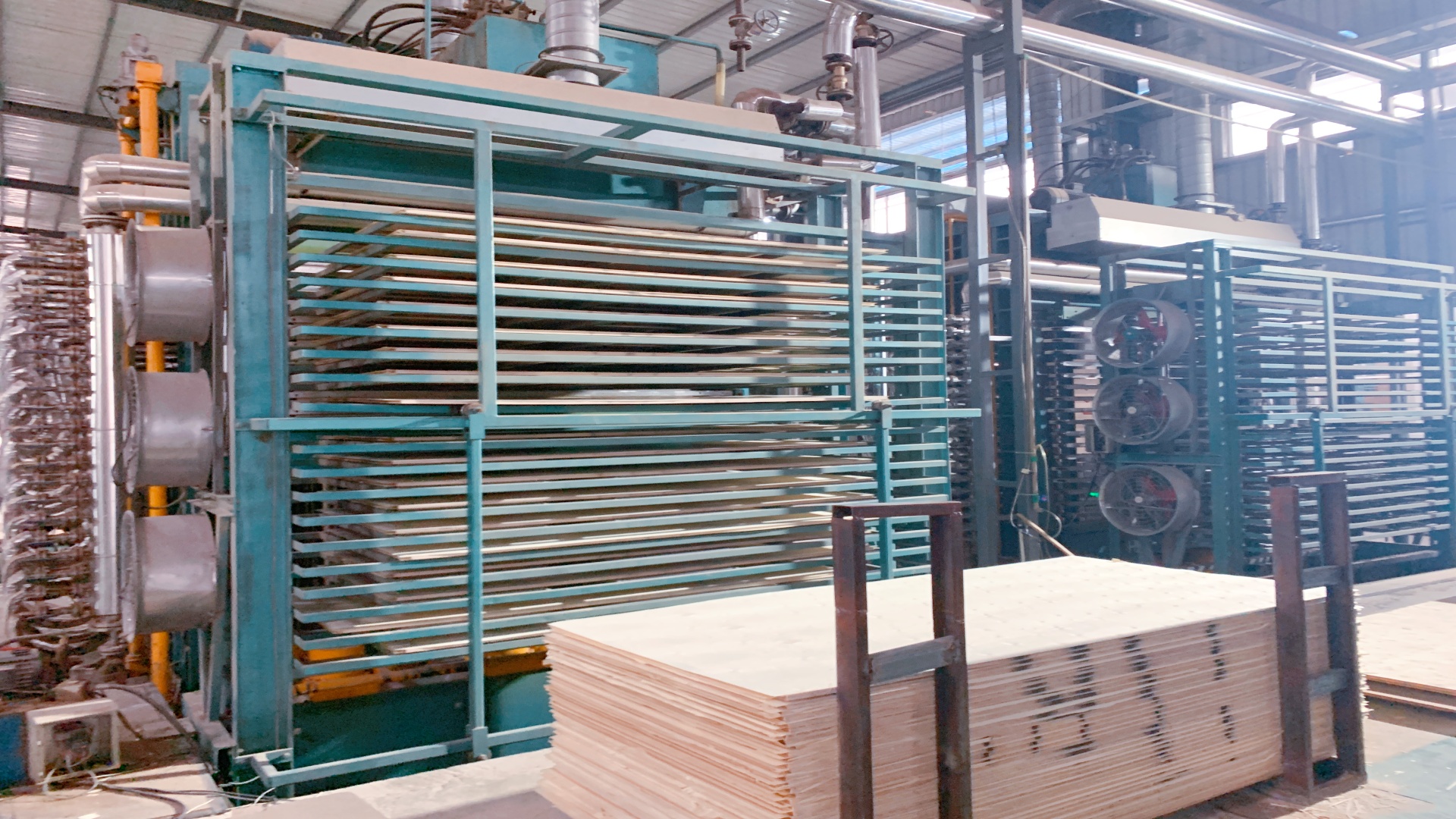
A modern plywood hot press machine is not simply a hydraulic press. It is a key process-control point that directly affects plywood bonding, thickness stability and production efficiency.
For plywood manufacturers, selecting the right machine and controlling pressure, temperature and pressing cycles consistently are more important than focusing on tonnage alone.


