

Views: 0 Author: Site Editor Publish Time: 2026-07-29 Origin: Site


Plywood density directly affects panel strength, screw-holding ability, durability, and dimensional stability. High-density plywood is widely used in construction, furniture, flooring, packaging, and industrial applications where reliable mechanical performance is required.Producing stronger plywood is not simply a matter of increasing hot press pressure. Manufacturers must control every stage of the plywood production line, including raw material selection, veneer peeling, drying, glue spreading, panel assembly, cold pressing, and hot pressing.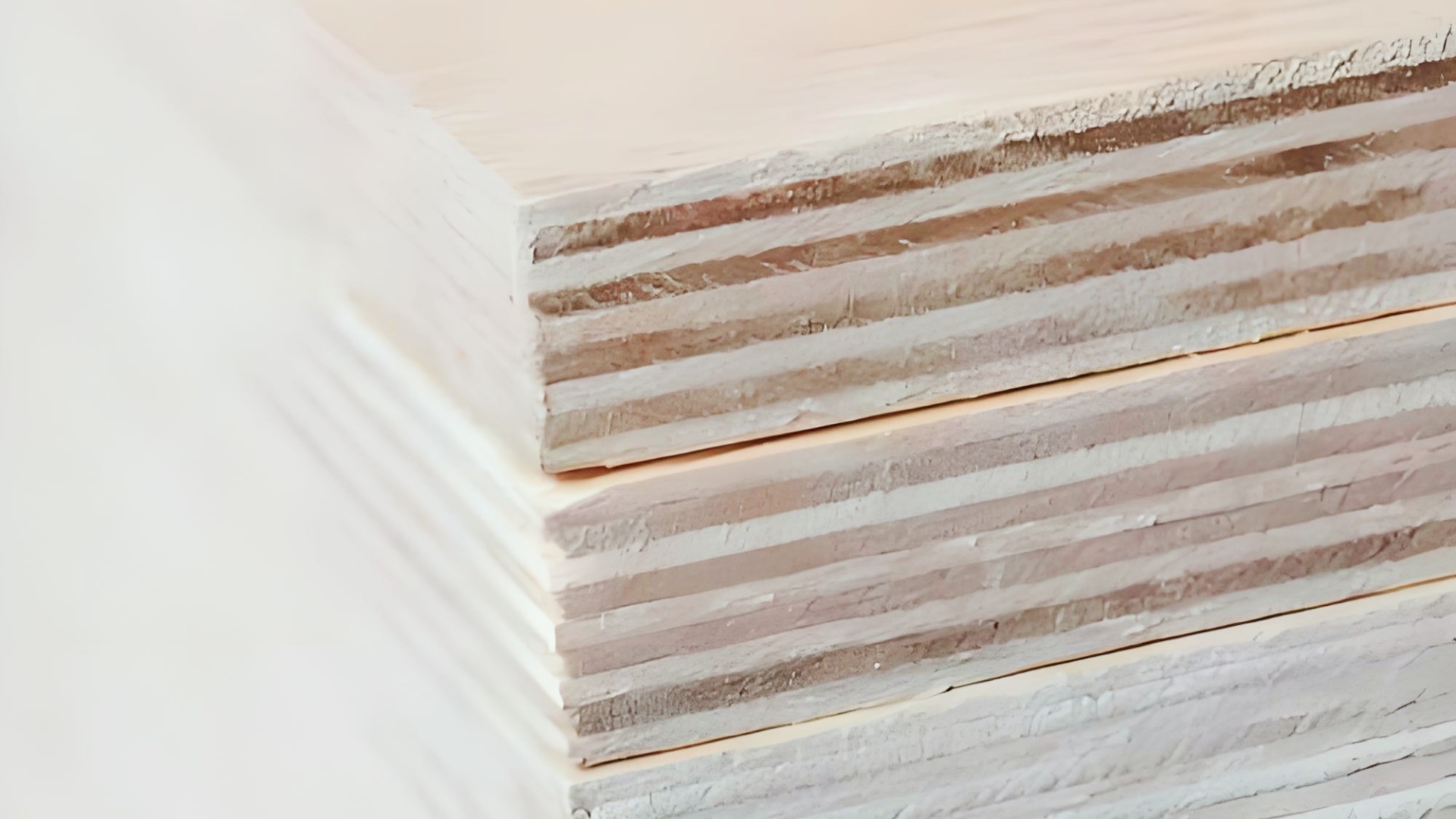
## Select Suitable Wood Raw Materials
The density of finished plywood begins with the quality and species of the logs. Hardwood species generally have a denser fiber structure than many softwoods and can provide a stronger foundation for high-density plywood.Manufacturers should select logs with stable quality, fewer large defects, and relatively uniform diameters. Logs affected by decay, deep cracks, or weak fibers may produce poor-quality veneers and create gaps inside the finished panel.The chosen wood species should also match the final application. Construction plywood, furniture plywood, flooring panels, and industrial boards may require different combinations of strength, weight, surface quality, and production cost.
## Maintain Uniform Veneer Thickness
Consistent veneer thickness is essential for uniform plywood density. Veneers that are too thick or too thin can create uneven glue layers, internal gaps, and weak areas inside the panel.A high-precision veneer peeling machine helps produce smooth veneers with stable thickness. Sharp peeling knives, accurate knife-gap adjustment, proper log centering, and stable machine operation all influence veneer quality.Regular inspection of the veneer peeling machine reduces thickness variation and improves the performance of later processes such as drying, gluing, pressing, and sanding.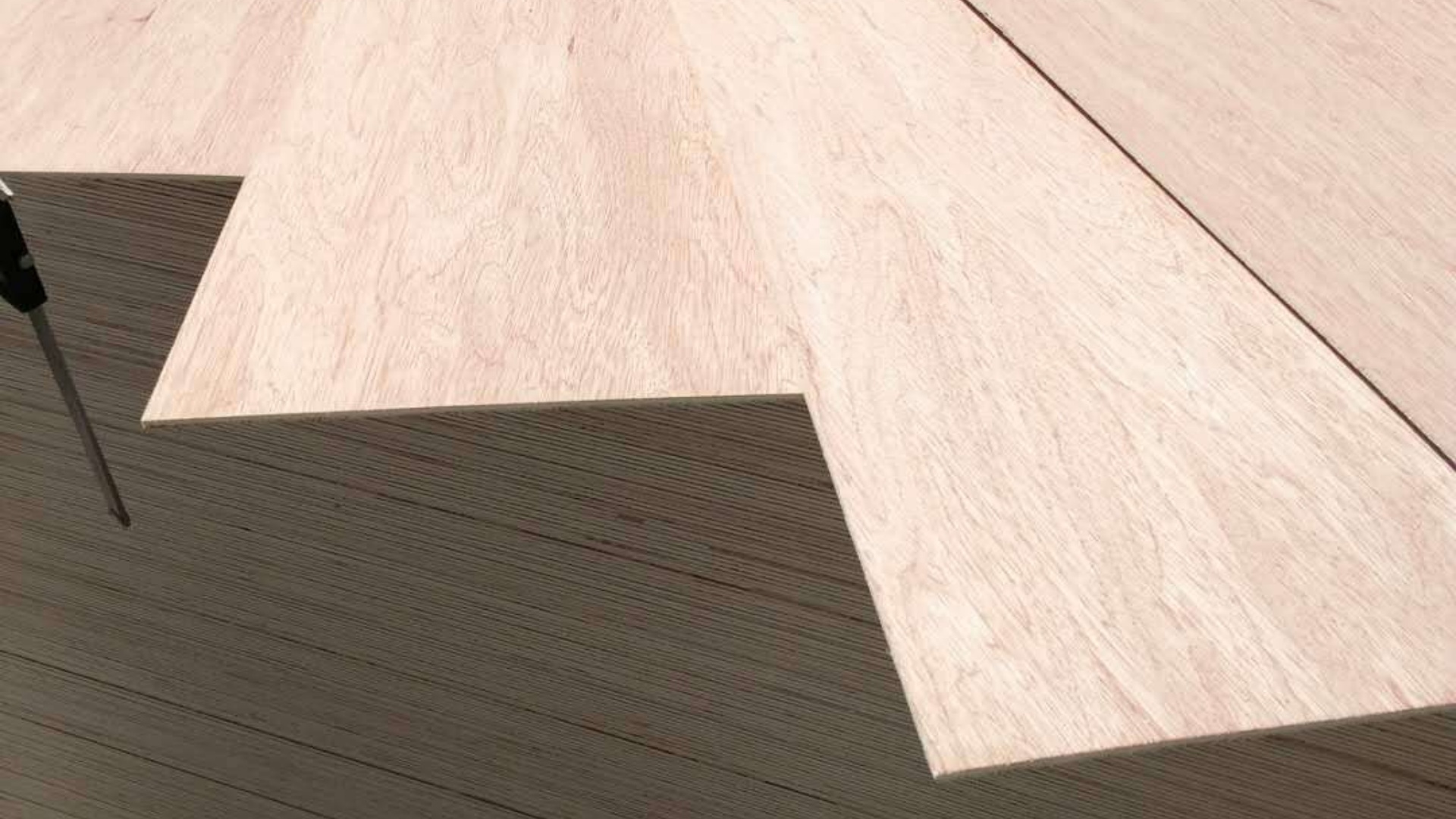
## Control Veneer Moisture Content
Veneer moisture content has a major influence on bonding quality and compression performance. Veneers with excessive moisture may produce too much steam during hot pressing, increasing the risk of bubbles, delamination, and unstable panel thickness.Veneers that are too dry may become brittle and absorb adhesive too quickly. This can reduce bonding strength and make the veneer stack more difficult to compress evenly.A reliable veneer dryer machine helps maintain consistent moisture across every sheet. In many plywood production processes, veneer moisture is controlled at approximately 8% to 12%, although the ideal level depends on the wood species, adhesive, veneer thickness, and pressing conditions.Uniform moisture improves heat transfer, glue curing, panel density, and production stability.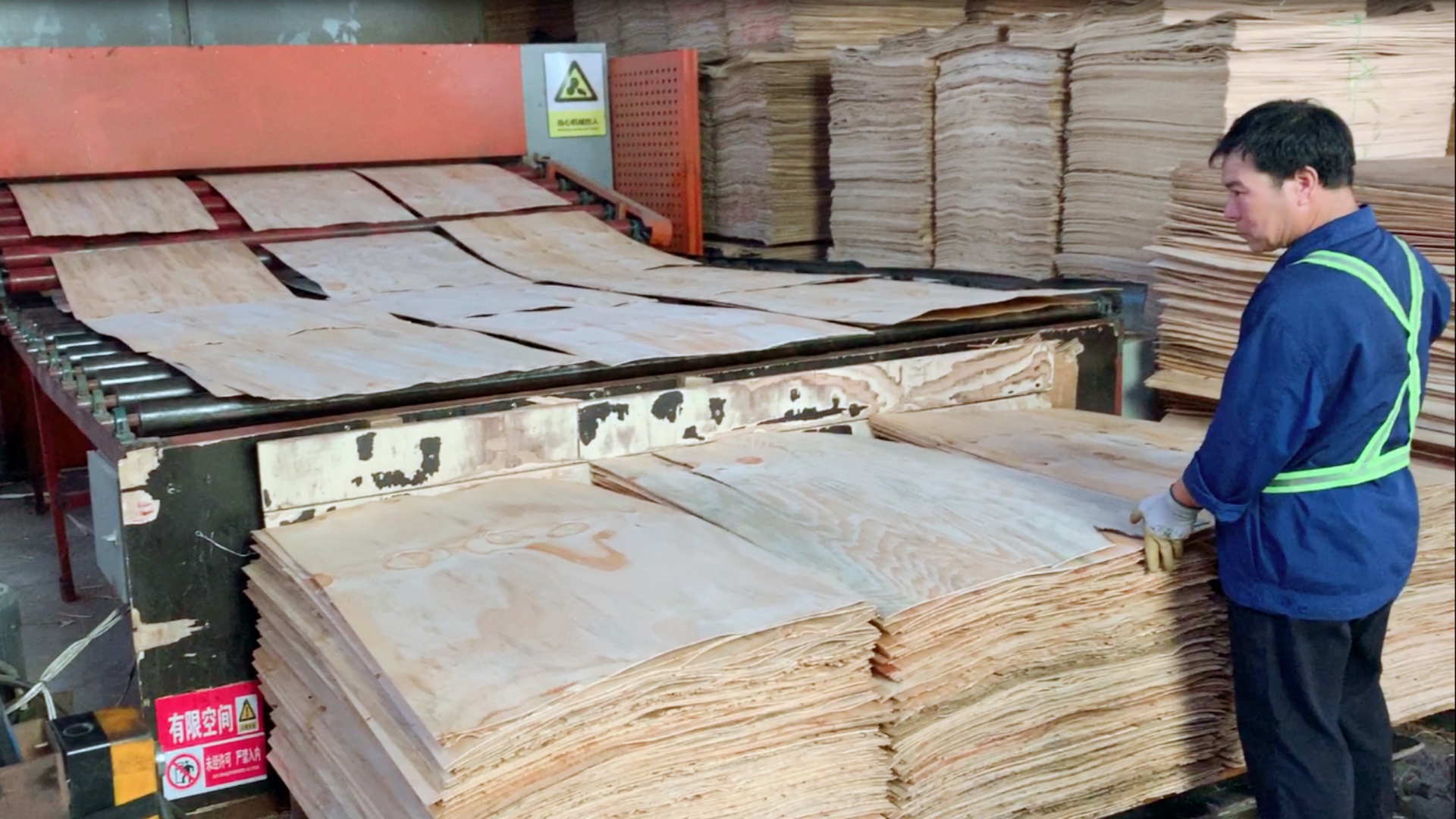
## Optimize Glue Spreading and Veneer Lay-Up
Adhesive should be distributed evenly across the veneer surface. Too little glue may cause weak bonding, while excessive glue can increase costs, extend pressing time, and create unnecessary moisture inside the panel.An automatic glue spreading machine provides more stable glue coverage than manual application. Glue viscosity, roller gap, roller pressure, and production speed should be checked regularly to maintain consistent results.The veneer lay-up should also remain balanced. Adjacent veneer layers are normally arranged with alternating grain directions to improve strength and dimensional stability. Veneers with similar thickness and moisture should be grouped together to reduce internal stress and uneven compression.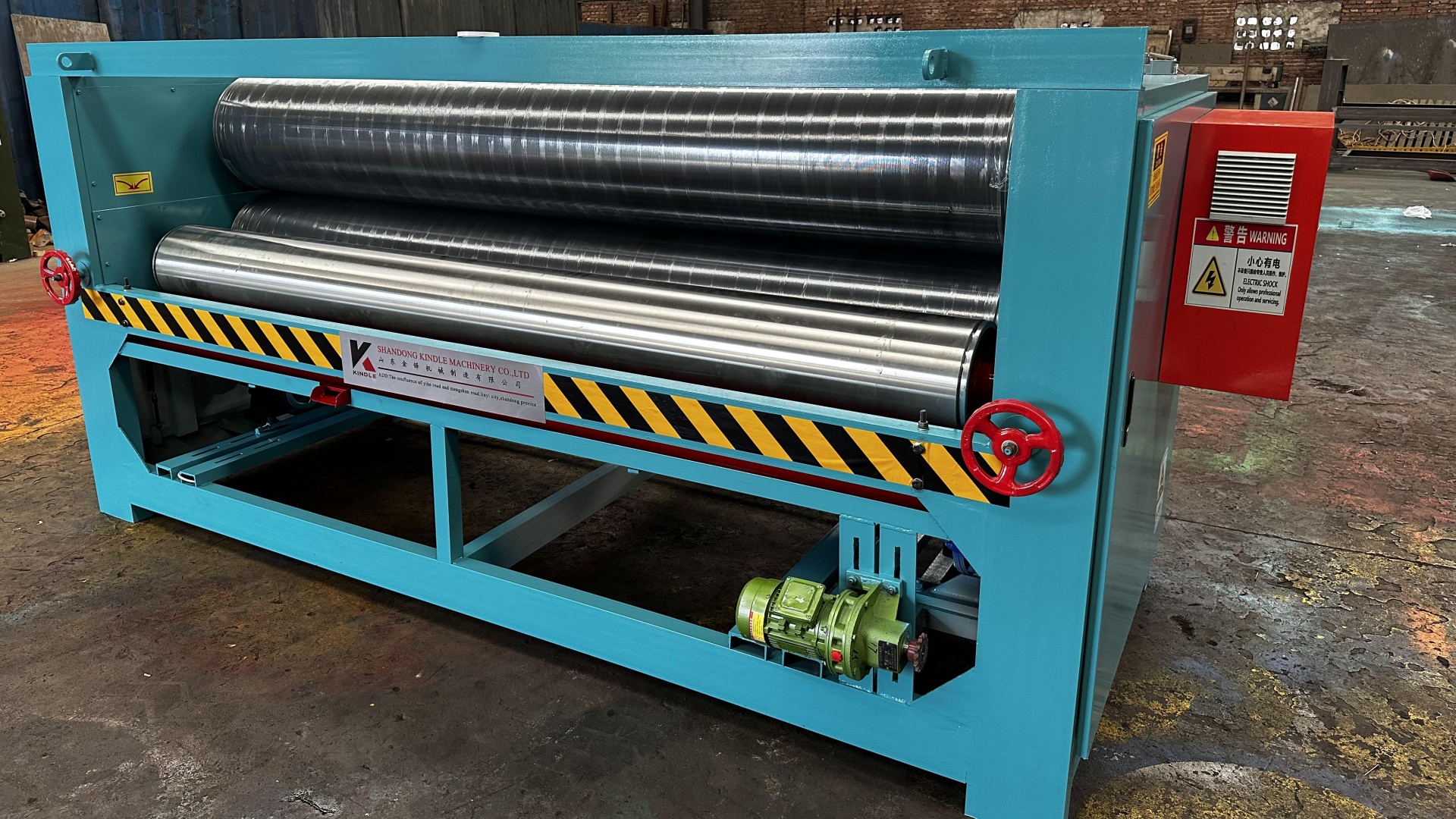
## Use Cold Pressing Before Hot Pressing
A plywood cold press machine applies preliminary pressure to the assembled veneer stack. This process improves contact between layers, stabilizes the panel structure, and prevents veneers from moving during transportation.Cold pressing also helps distribute adhesive more evenly and reduces large internal gaps before the panel enters the hot press.The correct cold pressing pressure and time depend on the wood species, adhesive system, panel thickness, and production requirements. Stable cold pressing creates better conditions for uniform hot pressing.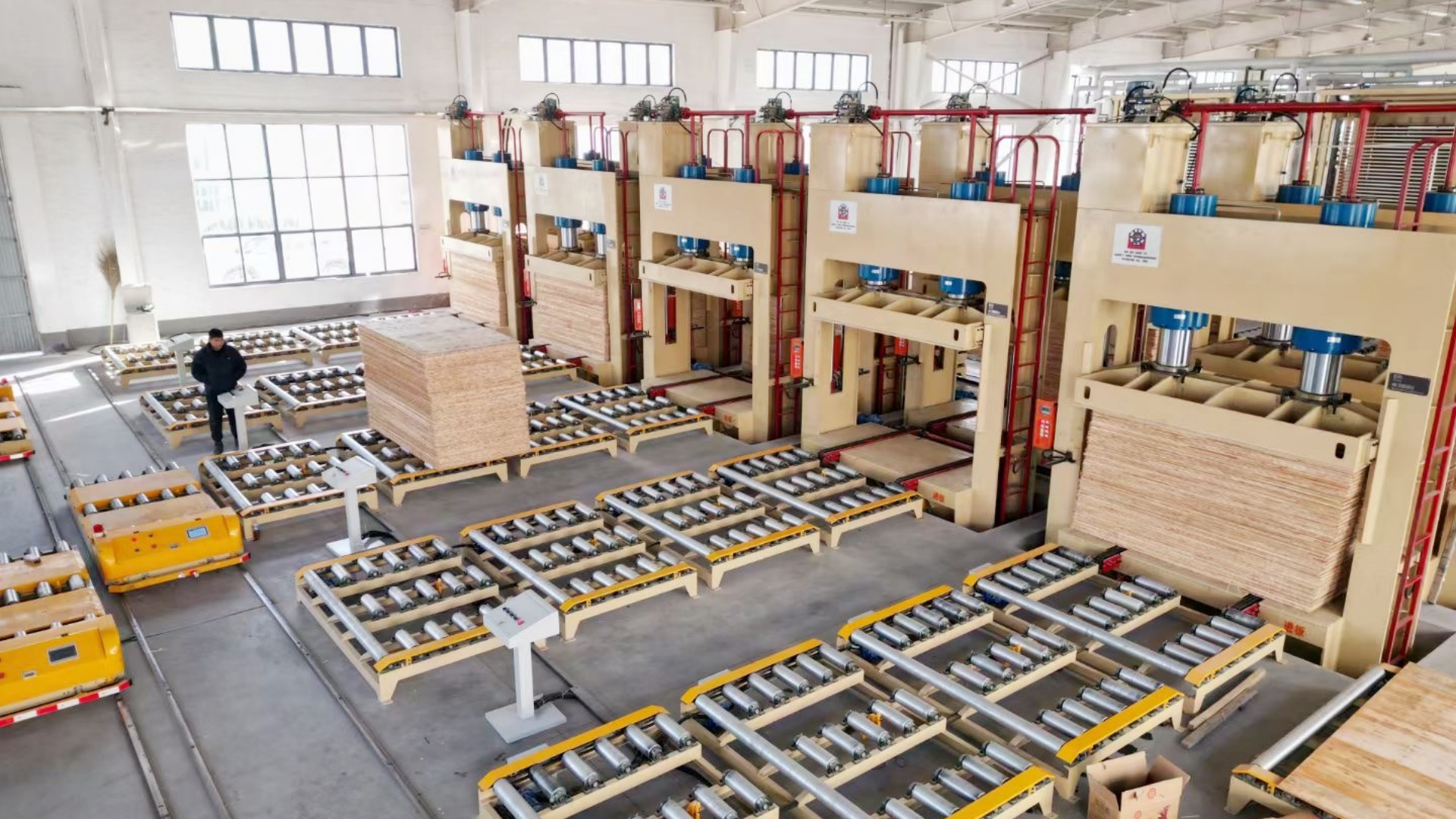
## Optimize the Hot Press Process
The plywood hot press machine has the greatest influence on final panel density, thickness, and bonding strength. Heat cures the adhesive, while hydraulic pressure compresses the veneer layers into a solid plywood panel.Suitable pressure helps reduce internal voids and improves contact between veneers. However, excessive pressure may over-compress the wood, squeeze out too much adhesive, or create internal stress.Pressing temperature must be high enough to cure the adhesive throughout the panel. Pressing time should also match the plywood thickness, veneer moisture, adhesive type, and platen temperature.Modern automatic hot press machines provide accurate control of pressure, temperature, pressing time, and closing speed. Stable pressing parameters help manufacturers produce high-density plywood with consistent quality across different batches.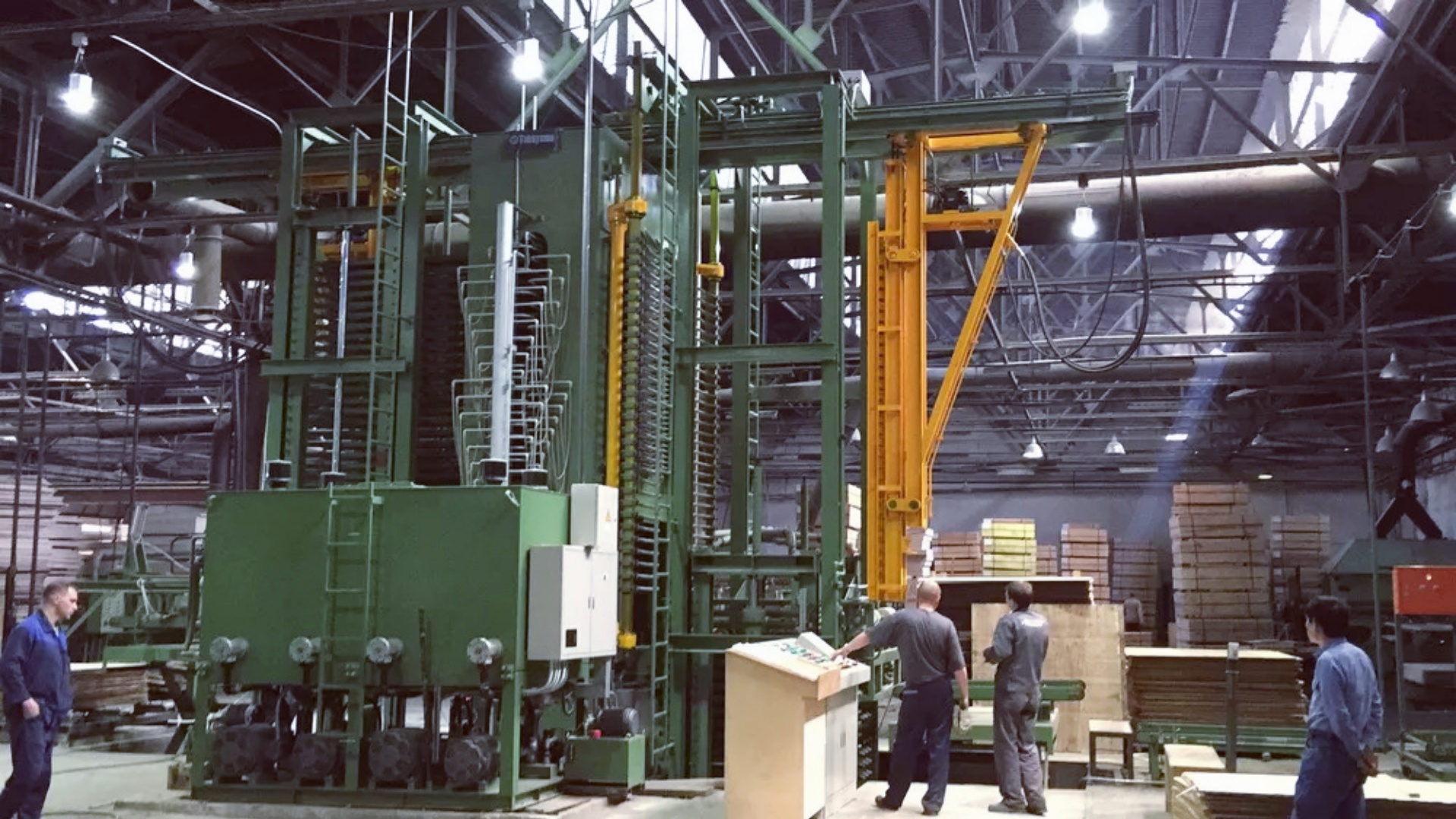
## Maintain the Complete Plywood Production Line
Even small equipment problems can affect plywood density. Worn peeling knives, uneven dryer airflow, inaccurate glue rollers, hydraulic pressure fluctuations, or damaged hot press platens may create inconsistent results.Regular maintenance and calibration of each plywood making machine help maintain stable production conditions. Manufacturers should monitor veneer thickness, moisture content, glue spread, press temperature, hydraulic pressure, and finished panel thickness.A complete plywood production line with coordinated equipment provides better process control, higher production efficiency, lower material waste, and more reliable product quality.
## Conclusion
Increasing plywood density requires control throughout the entire manufacturing process. Suitable raw materials, uniform veneer thickness, stable moisture content, accurate glue spreading, balanced lay-up, cold pressing, and optimized hot pressing all contribute to stronger plywood.
By improving equipment performance and production management, manufacturers can produce high-density plywood with better strength, durability, and dimensional stability while remaining competitive in the global wood panel market.


