

Views: 0 Author: Site Editor Publish Time: 2026-05-22 Origin: Site


How does a round log become a strong plywood board?
In a modern plywood factory, this process is completed by a full plywood production line. Each machine plays an important role, from log peeling to veneer drying, gluing, pressing, and final finishing.
The first key step is veneer peeling. Logs are debarked, cut, and sent into a veneer peeling machine.
The machine peels the log into thin veneer sheets with even thickness. Good veneer thickness helps improve plywood strength, surface quality, and production stability.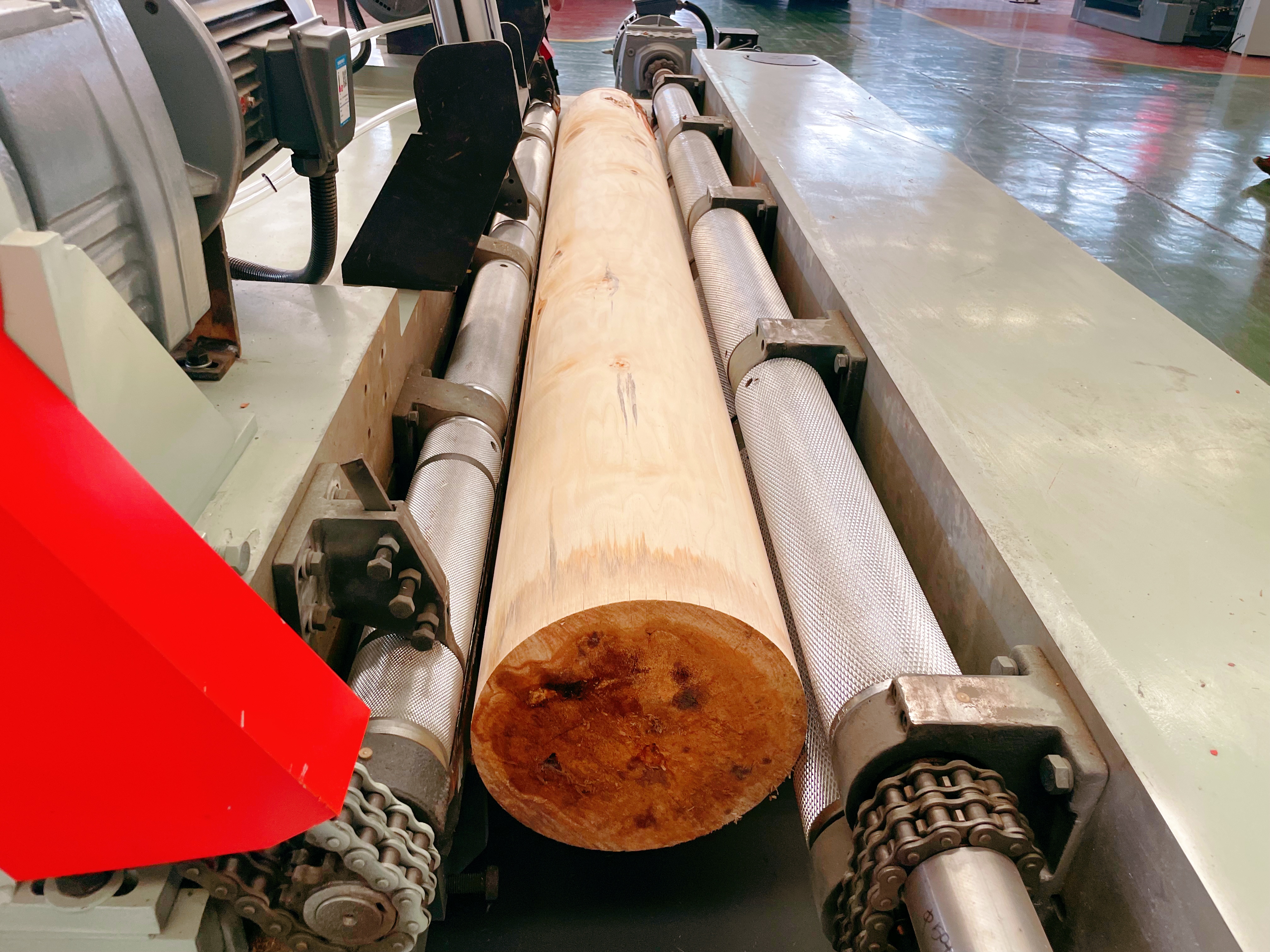
Fresh veneer contains too much moisture, so it must be dried before gluing.
A veneer drying machine reduces the moisture content to a suitable level. Proper drying can help avoid veneer cracking, warping, and poor glue bonding.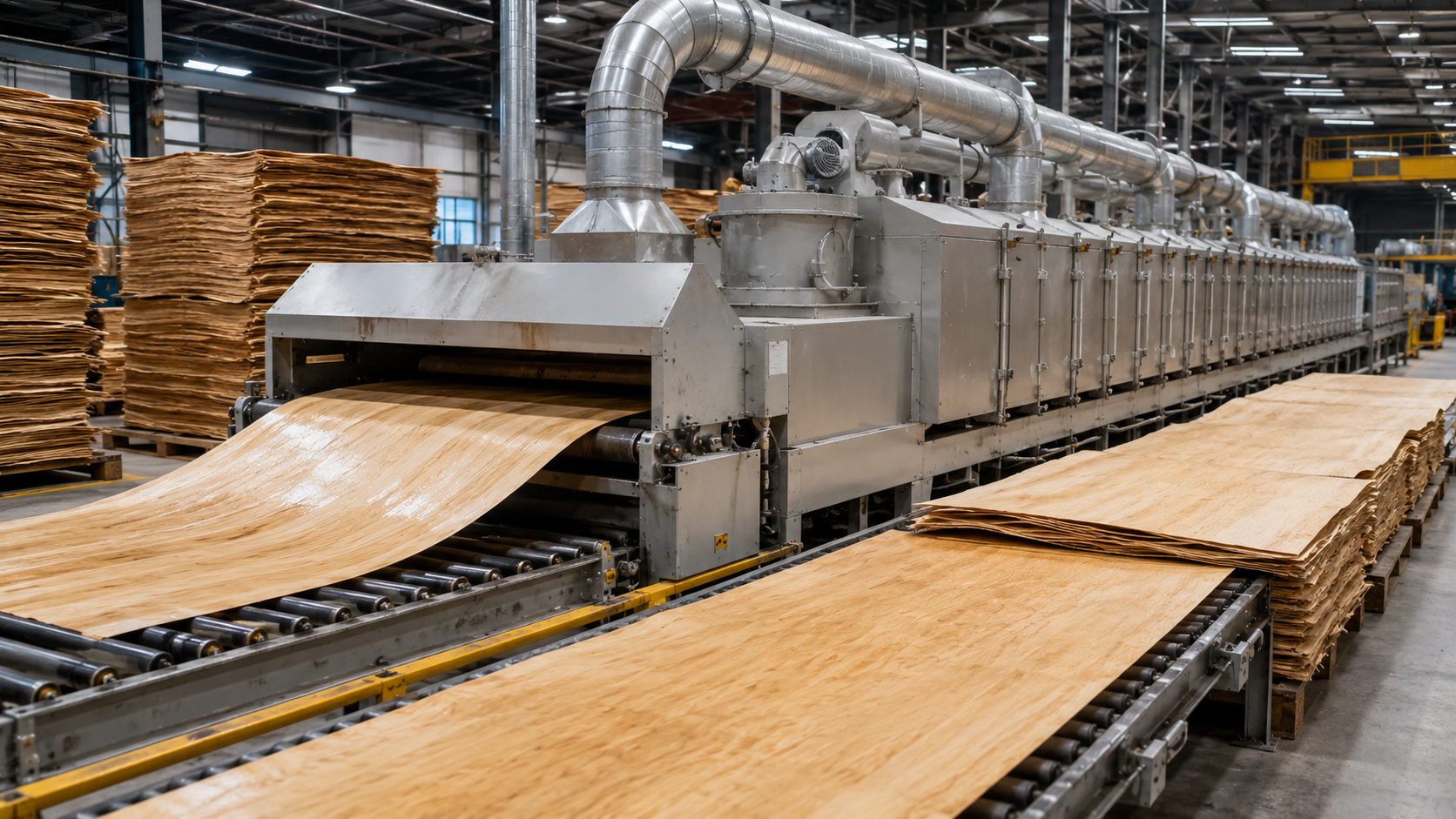
After drying, veneers are coated with glue by a glue spreader. Then the veneer layers are arranged crosswise.
This cross-grain structure is what makes plywood strong, stable, and not easy to deform.
Before hot pressing, the plywood cold press helps compact the veneer layers.
It removes air gaps, improves glue contact, and keeps the veneer mat flat. This step prepares the plywood for final pressing.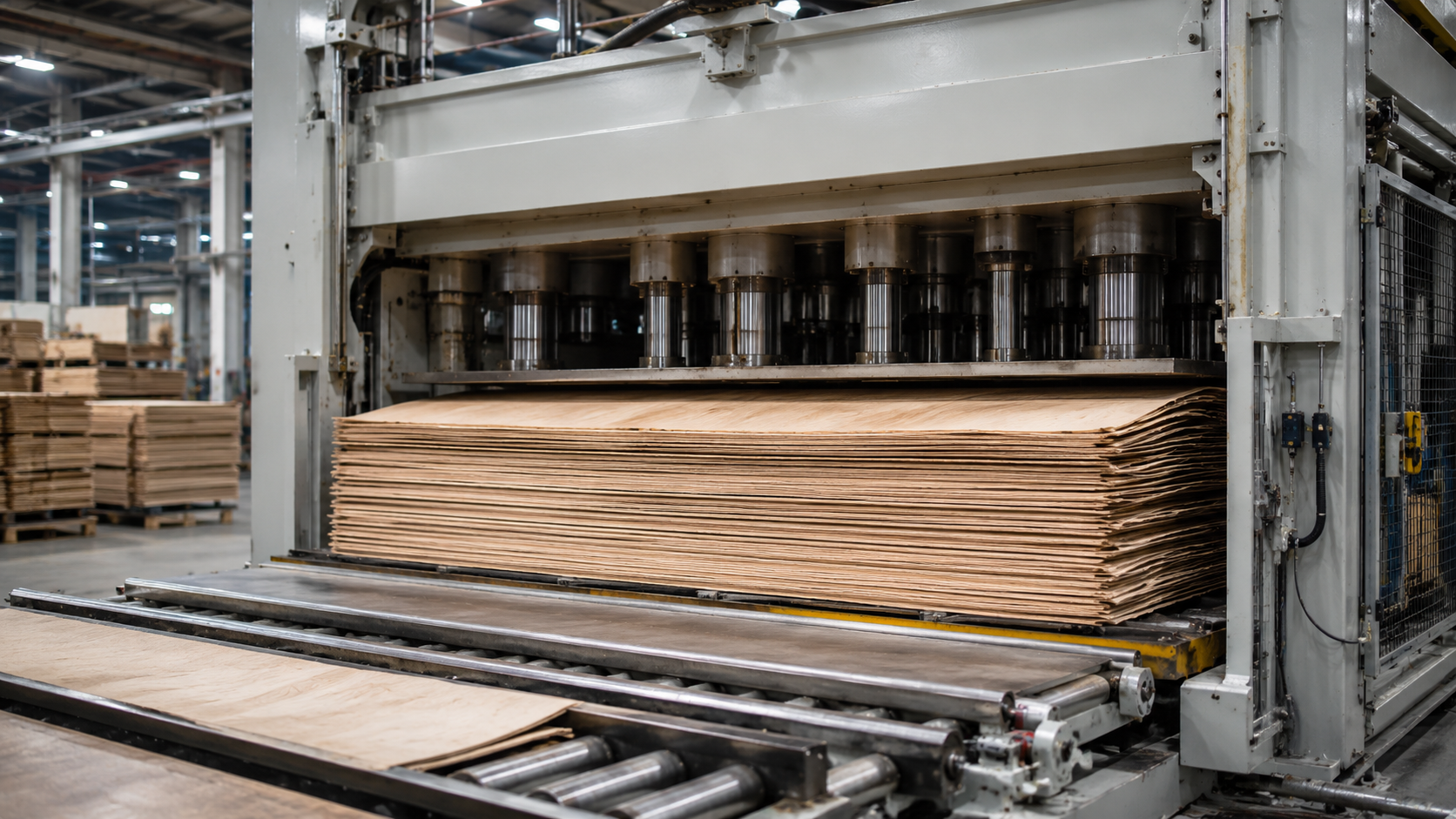
The plywood hot press is the core machine in the production line.
Under high temperature and pressure, the glue cures and the veneer layers become one solid plywood panel. This step decides the final thickness, strength, density, and surface quality.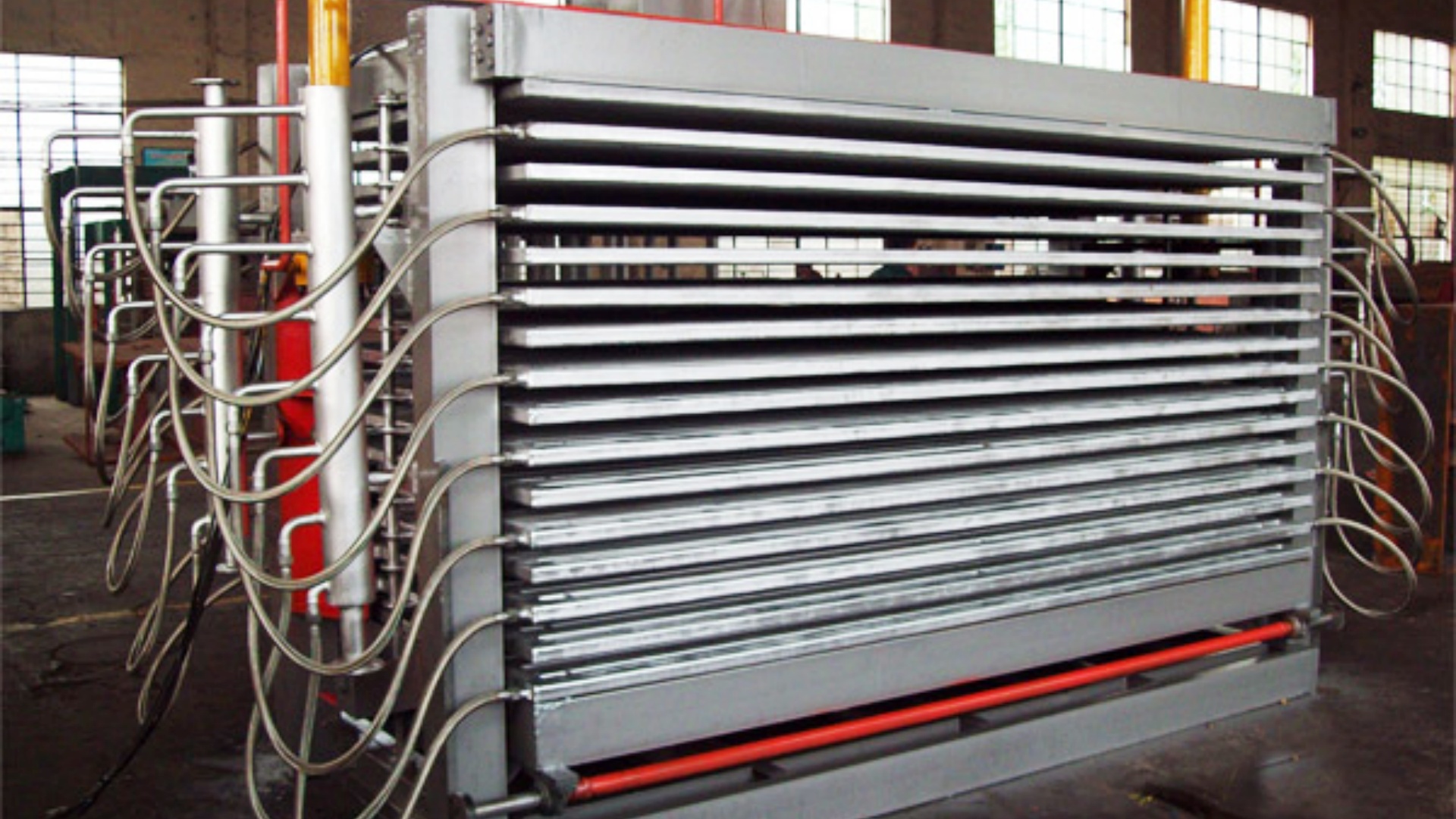
After hot pressing, the plywood panels are trimmed, sanded, inspected, and packed.
A complete plywood production line helps factories improve efficiency, reduce waste, and produce stable-quality plywood boards.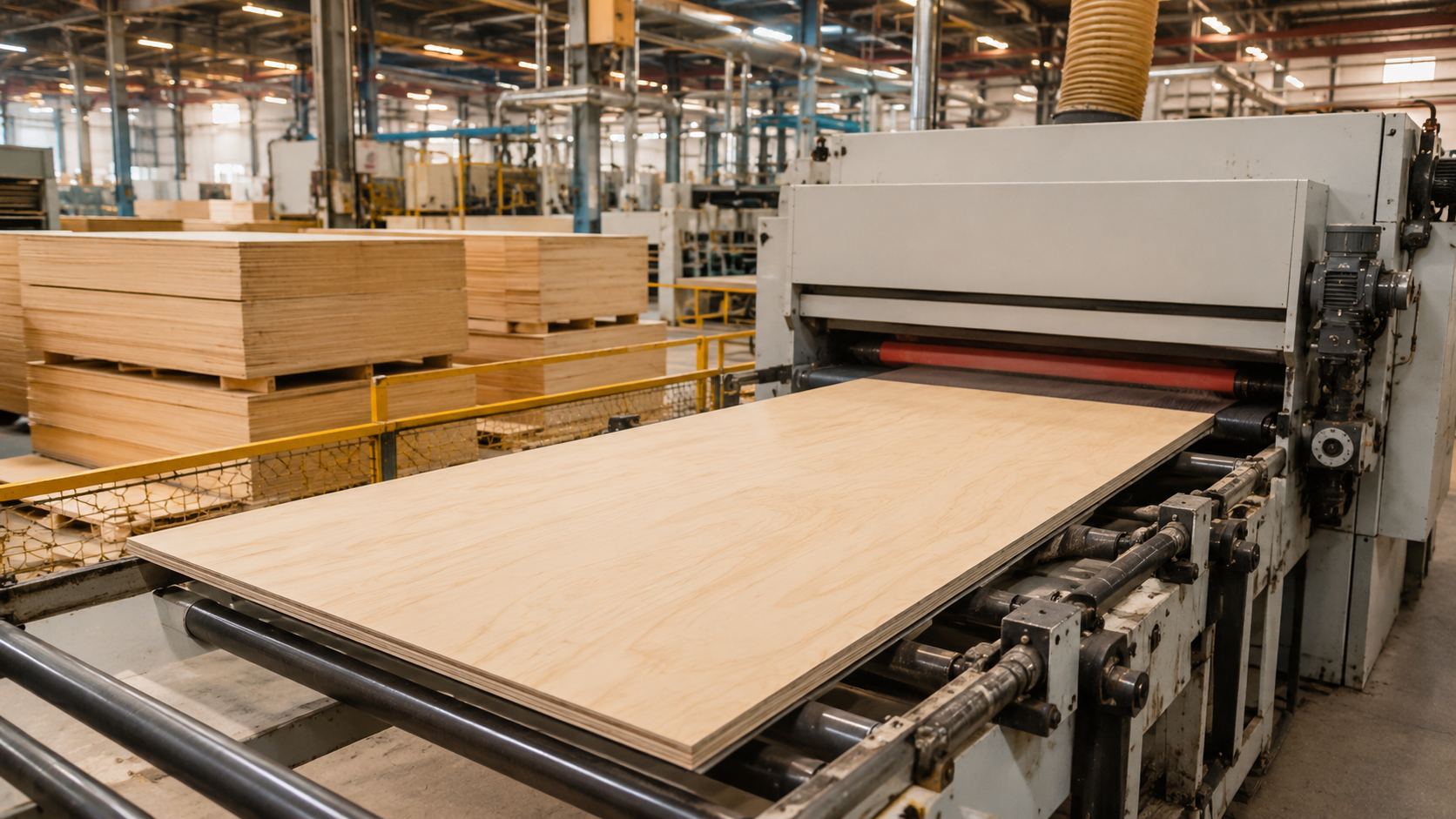
From one log to a finished plywood panel, every step requires reliable machinery.
For plywood manufacturers, choosing the right veneer peeling machine, veneer drying machine, glue spreader, plywood cold press, and plywood hot press can directly improve product quality and factory output.


