

Views: 0 Author: Site Editor Publish Time: 2026-07-22 Origin: Site


The wood processing industry is entering a new era of intelligent manufacturing.
Today, more manufacturers are replacing traditional manual veneer inspection with AI-powered veneer sorting technology. By combining machine vision, intelligent grading, precision clipping, and automatic veneer composing, factories can significantly improve production efficiency while reducing labor costs and material waste.
This technology is becoming an important solution for flooring veneer, furniture veneer, plywood veneer, and curved panel production.
Traditional veneer sorting depends heavily on operator experience.
Different workers often have different grading standards, making it difficult to maintain consistent product quality.
AI veneer sorting systems use high-resolution cameras and intelligent image recognition to inspect every veneer sheet automatically.
The system can quickly identify knots, cracks, wormholes, color variation, grain direction, and other defects with high accuracy.
This allows manufacturers to achieve stable grading results while improving production speed.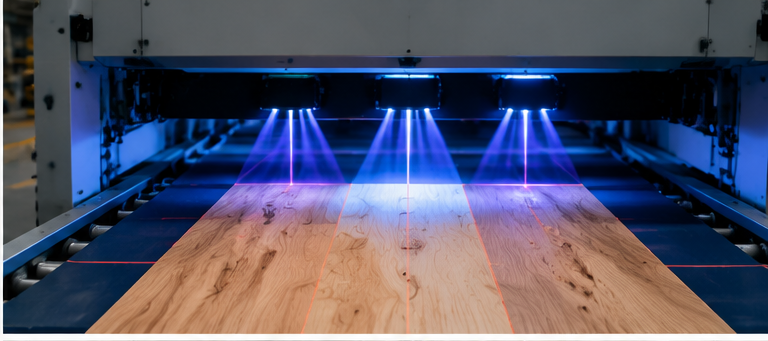
After sorting, intelligent veneer clipping technology automatically calculates the best cutting solution.
Instead of relying on manual judgment, the system selects the optimal cutting path to maximize usable veneer area.
This reduces waste, increases raw material utilization, and lowers production costs.
For manufacturers facing rising timber prices, every additional sheet of usable veneer creates greater production value.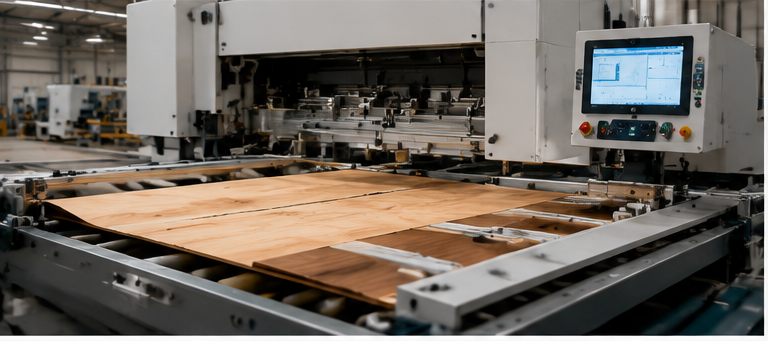
Short veneer sheets no longer need to become waste.
Modern veneer composer machines automatically match grain patterns, color, and thickness before joining veneer sheets into larger panels.
The finished veneer looks more natural, improves appearance quality, and provides better consistency for furniture, flooring, decorative panels, and plywood production.
This technology allows manufacturers to make better use of short veneer pieces while increasing the value of every log.
AI veneer processing technology can be widely applied in different wood manufacturing industries.
For flooring manufacturers, it helps achieve consistent grain and color.
For furniture production, it creates attractive veneer surfaces with fewer visible joints.
For plywood factories, intelligent grading improves panel quality and production efficiency.
For curved panel manufacturers, accurate veneer selection helps improve bending performance and product stability.
Modern veneer production is no longer based only on individual machines.
By integrating AI veneer sorting systems, veneer clipping machines, veneer composer machines, and automated material handling equipment, manufacturers can build a complete intelligent veneer processing line.
The result is higher productivity, lower labor costs, better product consistency, and greater competitiveness in the global market.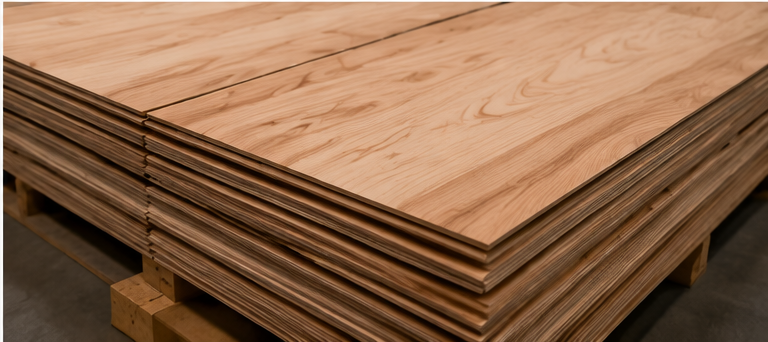
AI technology is changing the future of veneer processing.
From intelligent grading to precision clipping and seamless veneer composing, smart manufacturing allows wood processing companies to produce higher-quality products while reducing waste and improving efficiency.
For manufacturers looking to upgrade their production, investing in intelligent veneer processing equipment is becoming an important step toward sustainable growth.


